Searching for real estate for sale in the Gulf can feel unreal at first. One minute, you are scrolling through polished listings of waterfront apartments in Dubai, serene villas in Muscat, or sleek residences in Doha. The next minute, you are staring at service charges, ownership rules, payment plans, residency options, and legal terminology that seems designed to confuse normal people.
I like to start with one simple rule: never buy a property because the lobby smells expensive or the skyline view looks amazing at sunset.
Picture us standing on a high-floor balcony during a viewing. The agent is talking about luxury finishes, infinity pools, and “huge investment potential.” Meanwhile, I am looking at the things that actually protect your money: who owns the land, what the annual fees look like, whether the developer has delivered similar projects, what resale demand exists, and whether you can legally own the property as a foreign buyer.
That is the difference between buying a home you enjoy and buying a headache with marble flooring.
The UAE, Oman, and Qatar offer very different opportunities for buyers. Dubai gives you pace, liquidity, rental activity, and a huge mix of ready and off-plan properties. Oman gives you a calmer lifestyle, stronger privacy, natural scenery, and a more selective foreign-ownership structure. Qatar offers modern infrastructure, premium districts, residency-linked ownership opportunities, and a market built around long-term national development.
The best real estate for sale is not always the biggest villa, the tallest penthouse, or the cheapest apartment. It is the property that fits your actual goal: living, renting, holding wealth, relocating, or building a lifestyle for your family.
What Does “Real Estate for Sale” Really Mean for Gulf Buyers?
Real estate for sale is not just a listing category. It is a decision involving ownership rights, location, future demand, financing, property condition, legal registration, and exit strategy.
In the Gulf, buyers often make one of two mistakes. They either focus only on luxury and ignore the numbers, or they chase low prices without checking whether the unit will be easy to rent or resell later.
A smart buyer starts by defining the purpose of the purchase.
Are you buying a home for your family? Are you looking for a holiday apartment? Do you want rental income? Are you trying to secure residency? Or are you buying a luxury asset because you want exposure to a growing regional market?
Those goals lead to completely different property choices.
A beachfront apartment with hotel-style amenities may work beautifully for a short-term rental strategy. A townhouse near schools and supermarkets may suit a family far better. A luxury villa in a gated community may be ideal for long-term wealth preservation, but it can require heavier maintenance and higher service costs.
The property itself matters, but the ownership structure and location often matter more.
Why Buyers Are Looking at the UAE, Oman, and Qatar
The Gulf is not one single real estate market. Each country has its own buyer profile, laws, property styles, and investment logic.
The UAE, especially Dubai, attracts buyers who want variety. You can find compact studio apartments, branded residences, waterfront villas, golf-course communities, commercial units, and high-end penthouses in the same city.
Dubai also gives buyers access to public real estate data covering transactions, rents, projects, valuations, units, brokers, and developers. That makes it easier to compare a listing against market activity instead of relying only on an agent’s sales pitch.
Oman attracts buyers who prefer a slower, more grounded lifestyle. Muscat does not feel like Dubai, and that is exactly why many people love it. The appeal comes from its mountains, coastline, traditional architecture, lower-density communities, and relaxed rhythm.
Qatar appeals to buyers who want modern city living, high-quality infrastructure, premium master-planned districts, and residency-related ownership possibilities. Non-Qataris can own or use property in designated areas through freehold and usufruct structures, so buyers need to understand the exact ownership type before signing anything.
UAE Real Estate for Sale: Fast-Moving, Flexible, and Competitive
Dubai remains one of the most visible markets for international property buyers. You can buy apartments in urban districts, villas in gated communities, luxury residences on the waterfront, or off-plan units through developer payment plans.
The big advantage is choice.
The big risk is getting distracted by choice.
A buyer can see ten beautiful projects in one weekend and still have no clear idea which one has the strongest rental demand, the best layout, the lowest annual service charges, or the most reliable developer track record.
What Foreign Buyers Should Know in Dubai
Dubai allows foreign ownership in designated freehold areas. Before you commit, confirm whether the property is freehold, leasehold, off-plan, ready, mortgaged, or subject to any developer restrictions.
Dubai Land Department provides official sale-registration services for completed properties. Its current service information lists identity verification requirements, developer e-NOCs for freehold-area transactions, buyer and seller registration fees, title deed fees, map fees, and trustee-center charges.
Do not treat the asking price as your total budget.
Your buying budget should include:
- Property purchase price
- Dubai Land Department registration costs
- Trustee and administrative fees
- Mortgage-related costs, if applicable
- Broker commission, if agreed
- Service charges
- Furnishing and renovation costs
- Insurance and utility setup
- Emergency maintenance reserve
Dubai Land Department lists the buyer’s sale registration fee at 2% of the sale value and the seller’s fee at 2%, plus additional title deed, map, knowledge, innovation, and trustee charges. These costs can materially affect the cash you need at closing.
Ready Property vs Off-Plan Property in Dubai
Ready property gives you immediate visibility. You can inspect the exact unit, check the view, test the building access, speak with residents, review current rents, and potentially start earning rental income sooner.
Off-plan property can offer staged payment plans and access to newer communities, but it requires more discipline. You are buying based on plans, specifications, timelines, developer reputation, and construction progress.
Dubai REST provides information such as project-completion percentages, actual project photos, escrow account numbers, owner payment details, broker information, and sales and rental indexes. Use it before trusting glossy brochures or social-media videos.
A nice render is not due diligence.
Dubai Residency Angle
For some international buyers, property ownership connects with residency planning. Dubai Land Department states that investors who own qualifying property valued at AED 2 million or more may apply for a renewable 10-year residence permit, subject to the listed terms and documentation.
Do not buy a property only because of a visa promise from a salesperson. Confirm current eligibility requirements directly with the relevant authority before placing a deposit.
Oman Real Estate for Sale: Lifestyle First, Investment Second
Oman gives buyers something very different from Dubai’s fast-moving real estate scene.
You are buying into a country where mountain views, beaches, privacy, space, and traditional design often matter as much as rental yield. A luxury home in Muscat may feel more private and residential than a luxury home in a major UAE district.
For buyers who want a permanent lifestyle base, a holiday property, or a calmer second-home market, Oman can be extremely attractive.
The important thing is understanding the foreign-ownership rules.
Foreign buyers generally focus on approved Integrated Tourism Complexes, commonly known as ITCs. Official Invest Oman material identifies real estate purchases in Integrated Tourism Complexes as one of the investment routes tied to Oman’s Golden Residency programme.
What Makes Oman Different?
Oman is less about buying the loudest property in the room.
It is about buying a property that still feels good when you wake up there on a quiet Tuesday morning.
A buyer looking at Muscat should consider proximity to the airport, hospitals, schools, retail, beach access, business areas, and major road networks. You should also think about heat exposure, landscaping maintenance, sea-air corrosion, drainage, and long-term community management.
A sea-view villa sounds amazing until you realise the maintenance costs are much higher than expected.
A mountain-facing apartment can feel peaceful, but you still need to check parking, road access, community amenities, and everyday convenience.
Oman Buyer Checklist
Before buying property in Oman, check:
- Whether the property sits inside an approved ownership area for foreign buyers
- The exact ownership structure in the sale contract
- Developer history and completed-project quality
- Service fees and maintenance obligations
- Rental restrictions or holiday-rental rules
- Parking allocation and visitor parking
- Access to supermarkets, schools, healthcare, and the airport
- Community management standards
- Flood-risk and drainage conditions
- Resale demand for the specific location
Oman’s 10-year Golden Residency programme lists a minimum capital threshold of OMR 200,000 for eligible investment routes, including qualifying Integrated Tourism Complex real estate purchases.
That does not mean every property automatically creates residency rights. It means buyers must confirm that the asset, investment route, ownership structure, and documentation match the current official requirements.
Qatar Real Estate for Sale: Modern Districts and Ownership Options
Qatar has become increasingly interesting for buyers who want premium urban living, infrastructure, security, and long-term market positioning.
The country offers high-end waterfront living, modern apartment towers, mixed-use districts, luxury villas, and commercial opportunities. Areas such as The Pearl, Lusail, West Bay, and selected developments attract both local and international interest.
For foreign buyers, the key question is not simply, “Can I buy property in Qatar?”
The real question is, “What type of ownership can I hold in this specific area?”
Qatar allows non-Qataris to own and use properties in 25 designated areas. The two main structures are freehold ownership and usufruct ownership, which can typically extend for up to 99 years with renewal possibilities.
Freehold vs Usufruct in Qatar
Freehold ownership gives the buyer stronger ownership rights, including the ability to sell, rent, and mortgage the property within the legal framework.
Usufruct gives the buyer the right to use and benefit from the property for a defined term. It can still be valuable, but you need to understand the remaining term, renewal process, transfer rules, and resale implications.
Do not assume all apartments in Doha offer the same rights.
Two properties may look identical online, but one may be a freehold asset in a designated ownership zone while another may operate under a different legal structure.
That difference can affect your financing options, resale buyer pool, estate planning, and long-term value.
Qatar Residency Opportunities
Qatar links certain property investment thresholds to residency benefits. Invest Qatar states that buyers investing at least approximately USD 200,000 in qualifying real estate can access a five-year renewable residency permit, while investments of approximately USD 1 million may qualify for permanent residency benefits under the applicable conditions.
Again, do not rely on a verbal promise.
Ask for current written guidance. Confirm the property zone, title type, purchase value, residency conditions, and family eligibility before committing.
7 Things to Check Before Buying Real Estate for Sale
Buying property is emotional. Due diligence is logical. You need both.
- Ownership eligibility
Confirm that you can legally own the property based on your nationality, residency status, company structure, and the location of the unit. - Exact title type
Ask whether the property is freehold, leasehold, usufruct, jointly owned, mortgaged, or off-plan. - Developer reputation
Look beyond branding. Check delivered projects, handover quality, maintenance complaints, community standards, and resale performance. - Annual ownership cost
Service charges, cooling fees, maintenance, insurance, furnishing, and repairs can change the investment math quickly. - Rental demand
Do not use optimistic rental projections from a brochure. Compare actual rents, vacancy levels, tenant demand, and competing supply. - Resale demand
Ask yourself who will buy this property from you later. Families, investors, executives, holiday-home buyers, or nobody? - Exit strategy
Set your expected hold period before buying. A property that works for a three-year hold may not work for a ten-year lifestyle purchase.
How to Buy Property Without Getting Trapped by the Sales Process
Here is a cleaner buying process that protects you from rushed decisions.
- Set your maximum all-in budget.
- Define whether you are buying for living, rental income, residency, or capital preservation.
- Shortlist two or three areas, not twenty.
- Compare ready and off-plan options separately.
- Review recent transaction and rent data where available.
- Inspect the property at different times of day.
- Check noise, traffic, sunlight, parking, and community access.
- Confirm ownership rights with a qualified local legal professional.
- Review the sale contract line by line.
- Keep a financial reserve after closing.
The fastest way to make a bad purchase is to spend every available dirham, rial, or riyal on the down payment and leave nothing for the costs that follow.
Luxury Property Is Not Automatically a Good Investment
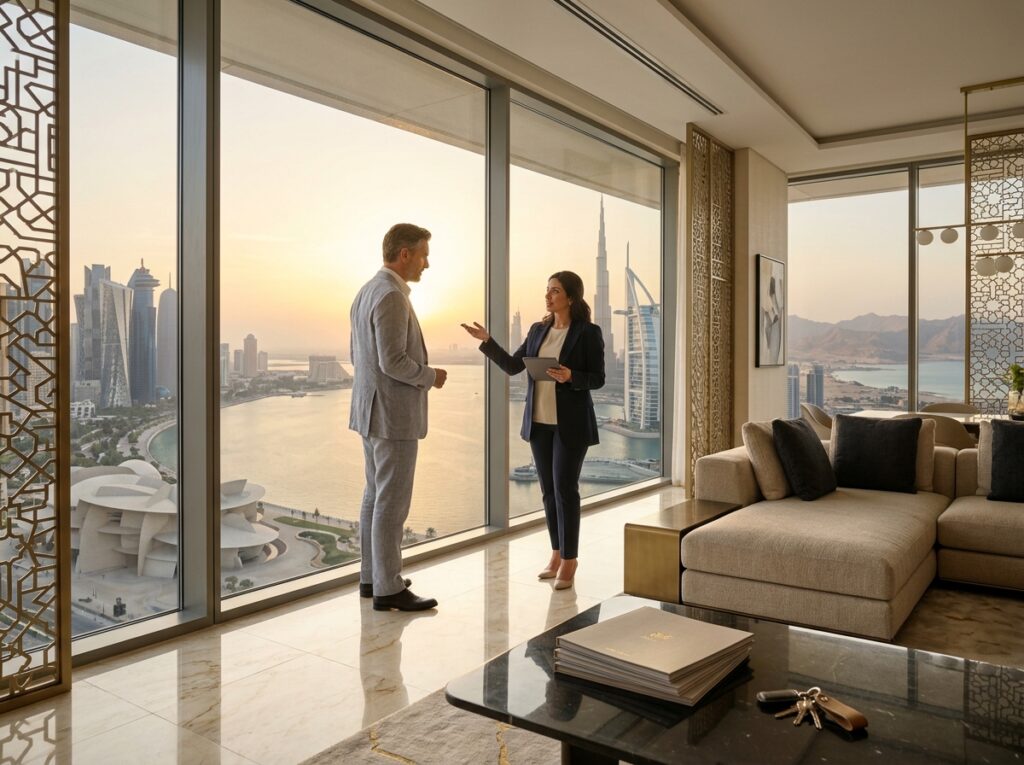
Luxury real estate can be a great asset, but luxury does not erase risk.
A branded residence may command stronger attention, but it can also come with higher service charges. A waterfront villa may hold appeal, but maintenance, weather exposure, and niche resale demand may affect the long-term return.
The best luxury assets usually combine several strengths:
- Strong location
- Practical layout
- Recognisable community
- Quality developer or operator
- Good management standards
- Limited competing supply
- Desirable views or access
- Clear ownership rights
- Healthy resale demand
Avoid buying a luxury home that only works in a brochure.
Walk through it. Open cupboards. Check bathroom pressure. Look at parking. Ask about delivery access. Inspect common areas. Visit nearby retail. Speak to security or residents where possible.
Real estate rewards buyers who notice boring details.
Final Thoughts: Buy With Clarity, Not Hype
The best real estate for sale in the UAE, Oman, or Qatar is not necessarily the property with the most dramatic view, the biggest launch event, or the loudest marketing campaign.
It is the property that matches your real objective.
Dubai may work for buyers who want scale, variety, liquidity, rental activity, and strong international visibility. Oman may work better for buyers who value lifestyle, privacy, coastline, mountains, and a slower investment pace. Qatar may be a strong fit for buyers who want modern infrastructure, premium districts, designated ownership zones, and residency-linked property opportunities.
Take your time. Compare the numbers. Verify the legal structure. Understand the fees. Choose the location before the finishes.
A great property purchase should feel exciting, but it should also make sense on paper.
Ready to take the next step? Read our next article: Best Luxury Real Estate Brokerage: How to Choose the Right Partner for High-End Property Deals in the Gulf.