Finding reliable building renovation contractors sounds easy until you actually start collecting quotes.
I learned this the hard way while helping review a renovation plan for an older Gulf property that looked fine from the outside but had several hidden issues inside. The owner wanted a modern kitchen, updated bathrooms, better lighting, and a cleaner exterior. Simple, right?
Not really.
The first contractor gave a cheap quote with almost no details. The second contractor offered a premium package but could not clearly explain the materials, approval process, or timeline. The third quote looked reasonable, but the contractor had excluded electrical upgrades, waterproofing, demolition waste, and permit-related work.
That is where most property owners get burned.
A renovation is not just about picking tiles, paint colors, or fancy lighting. It is about choosing building renovation contractors who understand structural safety, local approvals, MEP systems, villa layouts, material quality, climate conditions, and the real cost of changing a property while people may still be living inside it.
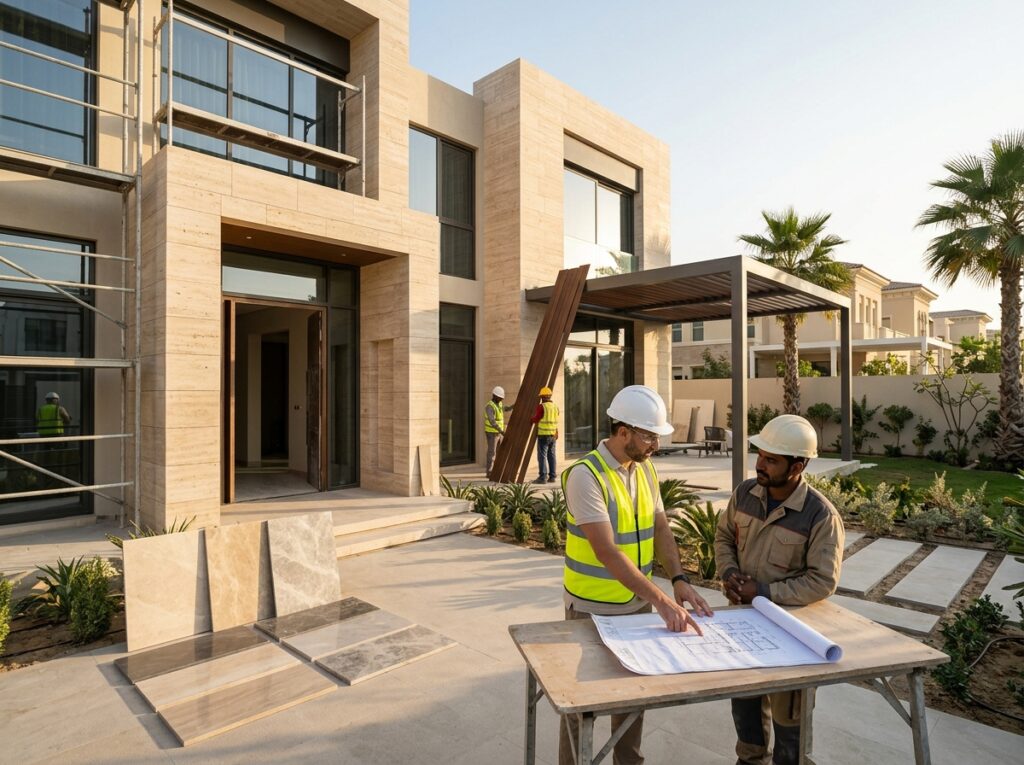
Whether you own a villa in Dubai, a family home in Abu Dhabi, an investment apartment in Doha, or an older property in Muscat, the right contractor can turn a stressful project into a strong long-term upgrade.
The wrong one can leave you with delays, surprise invoices, cracked finishes, leaking bathrooms, poor electrical work, and a property that looks good for six months but becomes a headache later.
This article breaks down how to find, compare, and hire building renovation contractors with confidence.
What Do Building Renovation Contractors Actually Do?
Building renovation contractors manage the physical work required to improve, repair, redesign, extend, or modernize a property.
Depending on the size of your project, they may handle everything from small interior upgrades to full structural renovation work.
A proper renovation contractor may coordinate:
- Demolition and debris removal
- Masonry and blockwork
- Flooring installation
- Ceiling and gypsum work
- Painting and decorative finishes
- Electrical rewiring
- Plumbing upgrades
- Air-conditioning modifications
- Kitchen renovation
- Bathroom renovation
- Waterproofing
- Exterior improvements
- Landscaping and outdoor structures
- Pool, fence, canopy, or shade installation
- Permit coordination and inspections
The biggest difference between a handyman team and professional building renovation contractors is responsibility.
A handyman may help fix a door, replace a tap, repaint a room, or install shelves. A renovation contractor should be able to manage multiple trades, schedule work, coordinate suppliers, protect the property, and deliver a finished project based on an agreed scope.
For bigger jobs, you want one party who owns the result.
You do not want to chase five different workers every morning asking where the electrician, tile installer, painter, and plumber disappeared to.
Why Hiring the Right Contractor Matters More in the Gulf
Renovation work in the UAE, Oman, and Qatar comes with challenges that are easy to underestimate.
The climate alone changes how you should renovate. Intense heat, dust, humidity, salt air in coastal areas, and heavy use of air-conditioning all affect materials and workmanship.
For example, a beautiful flooring choice may not perform well if it expands under heat. A poor waterproofing job may not show problems immediately, but it can create expensive damage later. Cheap plumbing fittings may fail faster under heavy water pressure. Weak AC design can make a large villa feel unevenly cooled and expensive to run.
You also need to think about local building requirements.
In Dubai, Dubai Municipality provides guidance contract forms for private villa engineering consultancy and construction contracting. The purpose is to clarify responsibilities between owners, consultants, and contractors and reduce technical, financial, and legal disputes during the project. (Dubai Municipality)
In Abu Dhabi, the Department of Municipalities and Transport has simplified approvals for certain minor works on villas and residential properties. These can include non-structural modifications, interior finishes, pools, canopies, fences, and extensions of up to 25 square metres. (DMT)
In Muscat, simple architectural modifications may require a minor building permit, with documents such as an approved architectural plan, owner letter, title deed, cadastral drawing, and identification. (Gov.om)
The lesson is simple, bro: do not assume a renovation is “too small” for approvals.
Your contractor should tell you exactly which works need permission, which works need consultant drawings, and which works can move forward under standard building maintenance rules.
Building Renovation Contractors vs Interior Fit-Out Contractors
A lot of people mix these two up.
An interior fit-out contractor usually focuses on visible interior finishes. Think cabinetry, flooring, ceilings, partitions, lighting fixtures, decorative walls, curtains, furniture installation, and paint.
A building renovation contractor handles a broader scope.
They can work on structural changes, plumbing, electrical systems, waterproofing, roofing, exterior walls, drainage, landscaping, air-conditioning upgrades, and major redesigns.
Here is a simple way to separate them.
Choose an Interior Fit-Out Contractor When:
You are upgrading finishes inside a property.
Examples include:
- Replacing kitchen cabinets
- Installing new wardrobes
- Changing floor tiles
- Adding decorative wall panels
- Repainting the villa
- Updating lighting fixtures
- Replacing curtains and furniture
Choose Building Renovation Contractors When:
The project affects the building itself or multiple technical systems.
Examples include:
- Removing walls
- Extending rooms
- Adding a maid’s room
- Changing bathroom layouts
- Replacing plumbing lines
- Rewiring electrical systems
- Improving drainage
- Building a pergola
- Adding a swimming pool
- Repairing roof leaks
- Upgrading AC systems
- Renovating an old villa from top to bottom
For large villa renovation projects, you often need both. The building contractor manages the heavy work, while a fit-out or interior design team handles the visual side.
7 Things to Check Before Hiring Building Renovation Contractors
Before you sign anything, check these seven points carefully.
1. Ask for Similar Project Experience
Do not just ask, “Have you done renovations before?”
Ask specific questions.
Have they renovated villas similar to yours? Have they worked inside gated communities? Have they managed occupied homes? Have they handled waterproofing, extensions, kitchens, bathrooms, pools, or exterior upgrades?
A contractor who mainly works on office fit-outs may not understand villa drainage, family privacy, outdoor shading, roof insulation, or domestic water systems.
Ask to see before-and-after photos, project videos, drawings, site progress images, and client references.
2. Verify Their Trade License and Technical Team
A professional contractor should be comfortable sharing business details.
You should know:
- Company name
- Trade license details
- Office location
- Project manager name
- Site supervisor name
- Electrical and plumbing team capability
- Insurance coverage where required
- Consultant or engineer involvement
- Previous project history
Do not hire purely based on a WhatsApp profile picture and a cheap verbal promise.
A renovation project can involve large deposits, expensive materials, and work that affects your property value. Treat it seriously.
3. Demand a Detailed Scope of Work
The scope of work is your protection.
It should explain exactly what the contractor will do, what materials they will provide, which areas they will protect, how waste will be removed, and what is excluded.
A weak quote says:
Renovation work for villa: AED/QAR/OMR XX,XXX.
A strong quote says:
- Remove existing bathroom tiles
- Repair damaged waterproofing membrane
- Supply and install new wall and floor tiles
- Replace concealed plumbing fittings
- Install new vanity cabinet
- Install mirror and lighting
- Repaint ceiling
- Remove construction waste
- Conduct water test before tile installation
- Provide workmanship warranty
The more specific the quote, the fewer surprise arguments later.
4. Compare Materials, Not Just Prices
One contractor may quote a cheaper amount because they use lower-grade materials.
That does not automatically mean they are dishonest. It may simply mean you are comparing two different project standards.
For example, a bathroom quote can vary massively depending on:
- Tile brand
- Waterproofing system
- Sanitaryware quality
- Mixer brand
- Cabinet material
- Shower glass thickness
- Lighting fixtures
- Concealed plumbing parts
- Labour quality
- Warranty period
Always ask for a material schedule.
You want the contractor to write down brands, specifications, quantities, colors, model numbers, and alternatives.
5. Check Their Project Management System
A renovation contractor should not just send workers and disappear.
Ask them:
- Who will supervise daily work?
- Who will update you?
- How often will progress reports be sent?
- Who approves material substitutions?
- How are delays communicated?
- Who coordinates inspections?
- How are defects handled?
A good contractor gives you one main point of contact.
That person should understand the job well enough to answer questions without saying, “I will check with the worker,” every single day.
6. Review Payment Terms Carefully
Never pay almost the full amount upfront.
A safer structure usually separates payments into stages, such as:
- Mobilization and site preparation
- Demolition and civil works completion
- MEP rough-in completion
- Finishes and installations
- Final handover after snagging
The exact percentage depends on the project, but the principle stays the same: payments should match visible progress.
Keep a meaningful final retention amount until defects are corrected and the project is fully handed over.
7. Ask About Warranty and Defect Liability
A contractor should provide written workmanship warranty terms.
You should clarify:
- How long is the workmanship warranty?
- What does it cover?
- Are leaks covered?
- Are tile cracks covered?
- Are electrical failures covered?
- Are supplied materials covered separately by manufacturer warranty?
- What is excluded?
- How quickly will they respond after handover?
A contractor who avoids warranty discussions is telling you something without saying it directly.
How to Compare Renovation Quotes Without Getting Tricked
The cheapest quote is rarely the cheapest project.
This is where property owners lose money.
A low quote may exclude work that you assumed was included. Later, the contractor starts requesting variation orders for demolition, electrical rewiring, plumbing adjustments, ceiling repairs, disposal, waterproofing, or permits.
When comparing building renovation contractors, put every quote into the same checklist.
| Category | Contractor A | Contractor B | Contractor C |
|---|---|---|---|
| Demolition included | Yes/No | Yes/No | Yes/No |
| Waterproofing included | Yes/No | Yes/No | Yes/No |
| Electrical work included | Yes/No | Yes/No | Yes/No |
| Plumbing work included | Yes/No | Yes/No | Yes/No |
| Material brands listed | Yes/No | Yes/No | Yes/No |
| Debris removal included | Yes/No | Yes/No | Yes/No |
| Permit support included | Yes/No | Yes/No | Yes/No |
| Warranty included | Yes/No | Yes/No | Yes/No |
| Timeline provided | Yes/No | Yes/No | Yes/No |
| Project manager assigned | Yes/No | Yes/No | Yes/No |
This simple comparison prevents confusion.
You may discover that the “expensive” contractor is actually cheaper once you include all missing works from the low quote.
Budgeting for a Renovation Project
Before collecting quotes, create a realistic budget range.
Do not spend every dirham, riyal, or riyal Omani on the visible finishes. Keep money aside for hidden work.
Older properties often reveal surprises after demolition.
You may find:
- Damaged plumbing lines
- Weak waterproofing
- Corroded electrical components
- Uneven floors
- Cracked walls
- Poor drainage
- AC duct issues
- Roof leaks
- Old cable routes
- Hidden moisture damage
For an early planning budget, many owners separate costs into categories like this:
- 20% to 30% for finishes and visible materials
- 15% to 25% for kitchens, bathrooms, and joinery
- 15% to 25% for electrical, plumbing, AC, and technical work
- 10% to 20% for labour, demolition, protection, and site management
- 10% to 15% for contingency
These are planning bands, not fixed rules.
A cosmetic apartment refresh may need less contingency. An old villa with bathrooms, roof work, exterior upgrades, and MEP replacement may need more.
The smartest move is to create two budgets.
The first is your target budget.
The second is your maximum comfortable budget if hidden issues appear.
That way, you do not panic when the contractor finds something behind a wall.
Permits, NOCs, and Developer Approvals
This part is boring until it delays your project for three weeks.
For villas in gated communities, compounds, towers, and master-planned communities, you may need approval from more than one party.
Possible approvals can include:
- Municipality permit
- Developer NOC
- Community management approval
- Landlord approval
- Consultant drawings
- Civil defense-related review
- Utility coordination
- Security access approval
- Work permit for contractors
- Waste removal approval
- Elevator booking for apartment renovations
In Abu Dhabi, the updated minor works process allows contractors to directly obtain approvals for certain villa-related improvements, but the exact classification still matters. Structural works and larger upgrades require more technical coordination. (DMT)
Oman’s official building code framework includes specific requirements for existing buildings, repairs, alterations, additions, relocation, and change of occupancy. That means renovation work should not be treated as “just cosmetic” when the project changes how the building performs or is used. (mohup.gov.om)
Qatar has also expanded digital permit processing. Its AI-powered Building Permits System was announced as a way to standardize technical checks and process engineering plans faster, but clean drawings and the correct scope still matter. (Government Communications Office)
The best building renovation contractors will identify approvals before workers arrive on site.
That protects you from fines, project shutdowns, access problems, and disputes with the developer or municipality.
Common Red Flags When Choosing a Contractor
Here are the warning signs that should make you pause.
- The contractor refuses to provide a written scope.
- The quote is dramatically lower than everyone else.
- They pressure you to pay a huge advance.
- They cannot show completed similar projects.
- They avoid discussing permits.
- They refuse to list material brands.
- They keep saying “everything is included” without details.
- They have no site supervisor.
- They want to start demolition before approvals are clear.
- They promise an unrealistic completion date.
- They only communicate through disappearing messages or voice notes.
- They cannot explain how variation orders will be priced.
A good contractor may not always be the cheapest, fastest, or flashiest.
But they should be organized, transparent, responsive, and technically credible.
How to Manage Your Contractor During the Renovation
Even after hiring the right company, stay involved.
You do not need to stand on site every day wearing a helmet and acting like a construction manager. But you should have a simple control system.
Use a Weekly Progress Checklist
Every week, ask for:
- Completed work
- Work planned for next week
- Materials delivered
- Pending approvals
- Design decisions required from you
- Delays or risks
- Updated timeline
- Payment milestone status
- Photos and videos from site
This keeps everybody honest.
Approve Changes in Writing
Never rely on verbal changes.
If you decide to upgrade tiles, move a wall, change kitchen cabinets, add outdoor lighting, or install a pergola, request a written variation order.
It should include:
- Description of the change
- Added or reduced cost
- Impact on timeline
- Material details
- Approval signature or written confirmation
This protects both you and the contractor.
Do Not Rush Waterproofing and MEP Work
The visible finishes are exciting.
But the hidden technical work matters more.
Before tiling bathrooms, confirm waterproofing tests are complete. Before closing ceilings, confirm electrical and AC work is checked. Before painting, confirm there are no leaks or moisture issues.
A pretty bathroom with bad waterproofing is not a finished bathroom. It is an expensive future repair.
Villa Renovation Considerations for UAE, Oman, and Qatar
Villa projects need more planning than apartment renovations because they often involve exterior spaces, multiple bathrooms, AC zones, landscaping, service areas, roofs, and parking.
For a villa, building renovation contractors should assess:
- Roof insulation and waterproofing
- External wall cracks
- Boundary walls and gates
- Swimming pool condition
- Pergola or shading structure
- Outdoor kitchen or BBQ area
- Garden irrigation
- Water tanks
- Drainage slopes
- Garage flooring
- External lighting
- Maid’s room upgrades
- Driver room improvements
- Guest majlis renovation
- AC capacity for extensions
Cultural expectations also matter.
Many Gulf villas include formal majlis areas, separate guest spaces, family zones, service entrances, outdoor seating, or private garden areas. A good contractor should respect privacy, family routines, prayer times, community rules, and site access requirements.
For occupied villas, ask the contractor how they will control dust, noise, worker movement, bathroom access, and daily cleaning.
That matters a lot when children, elderly family members, guests, or domestic staff are living in the property during renovation.
Final Thoughts
Hiring building renovation contractors is not about finding the lowest number on a quote.
It is about finding a team that understands your property, your budget, your local approval requirements, and your final goal.
The right contractor gives you a detailed scope, realistic timeline, clear materials list, proper payment schedule, written warranty, and transparent project communication.
The wrong contractor gives you vague promises, cheap prices, rushed decisions, and expensive surprises.
Take your time before signing. Compare at least three serious quotes. Ask questions. Visit completed projects. Check approvals. Protect yourself with a proper contract.
Your renovation should increase comfort, property value, rental appeal, and long-term confidence in your home.
Do it once. Do it properly.
Next Article: Villa Renovation
Ready to take your project beyond basic repairs? Read our next article on villa renovation to learn how to plan a luxury, practical, and high-value villa upgrade without wasting money on the wrong design choices.