A kitchen does not need a full demolition to feel completely different. The smartest way to remodel a kitchen on a budget is not chasing the cheapest quote. It is choosing the upgrades that make the room look newer, work better, and stay easy to maintain without paying for changes nobody will notice.
I learned this the hard way while helping plan a compact apartment-kitchen refresh. The first wish list sounded harmless: move the sink, open a wall, replace every cabinet, install a waterfall island, and upgrade every appliance. Ten minutes later, the “affordable” renovation had turned into a major build.
We stepped back, kept the plumbing where it was, reused the cabinet boxes, upgraded the doors, improved the lighting, and chose one beautiful focal point. The finished kitchen looked far more expensive than the budget suggested.
That is the move, bro. You do not need to copy a showroom kitchen piece by piece. You need to understand which decisions create visual impact and which ones quietly eat your money.
This article breaks down how to set a realistic budget, plan a low-stress renovation, avoid the most expensive mistakes, and make smart choices for homes in the UAE, Oman, and Qatar. Whether you own a villa in Muscat, a family apartment in Doha, or a Dubai studio you want to improve before renting it out, the same principle applies: preserve what works, upgrade what people touch and see every day.
What Does It Really Mean to Remodel a Kitchen on a Budget?
A budget kitchen remodel is a controlled upgrade, not a compromise-filled project. You choose a clear spending ceiling, protect a contingency reserve, and direct the majority of the budget toward the parts that affect function, durability, and first impressions.
The key word is controlled. A low budget can still produce a weak result when the plan changes every three days. On the other hand, a focused project can look polished even when it avoids luxury stone, imported hardware, and a complete layout redesign.
A good budget remodel usually keeps the kitchen footprint intact. The sink, cooker, fridge, and drainage remain in approximately the same places. That instantly reduces plumbing, electrical, wall repair, tile replacement, and approval-related costs.
You are not “settling.” You are protecting the budget for upgrades with actual daily value.
In Gulf homes, this approach matters even more. Apartment access rules, lift protection, work-hour limits, delivery scheduling, and building-management approvals can affect the final figure just as much as the cabinet material. A renovation plan that looks cheap on paper can become expensive once you add dismantling, debris removal, access coordination, and last-minute changes.
Start With the Right Budget: Your Numbers Before the Showroom
Do not visit a kitchen showroom before writing down your maximum all-in number. Once you fall in love with a display kitchen, it becomes much harder to separate “want” from “must have.”
Your all-in budget should include materials, labour, delivery, removal of old units, touch-up work, permits or management approvals where required, and a contingency reserve. Keep 10% to 15% aside for discoveries behind the cabinets, small plumbing repairs, extra electrical points, or a missing item that suddenly becomes essential.
One UAE kitchen-renovation cost reference places apartment projects broadly between AED 20,000 and AED 90,000 or more depending on the project scope, materials, and specifications. Treat this as a market indicator rather than a guaranteed quote, because your building, layout, contractor, and finishes will heavily affect the final number. (Fixit Design)
A Simple Budget Split That Prevents Regret
Use this structure as a planning tool, then adjust it around your priorities:
- 35% for cabinets, doors, and storage: These define most of the kitchen’s visual character.
- 20% for countertops, backsplash, sink, and tap: These are the high-touch surfaces that make the kitchen feel finished.
- 15% for labour, removal, delivery, and installation: Never hide these costs inside a vague “miscellaneous” line.
- 12% for appliances: Buy only the appliances that solve a real problem now.
- 8% for lighting, paint, and small finishes: These items create a disproportionate visual upgrade.
- 10% for contingency: Keep it untouched until a genuine issue appears.
For example, a hypothetical QAR 25,000 kitchen refresh could put QAR 8,750 into doors and storage, QAR 5,000 into surfaces and plumbing fixtures, QAR 3,750 into work and logistics, QAR 3,000 into appliances, QAR 2,000 into finishes, and QAR 2,500 aside.
The same percentages work whether you are planning in AED, OMR, or QAR.
The big lesson: do not spend 70% on fancy cabinets and then realize you cannot afford the labour, worktop, lighting, or installation details that make them look good.
The Golden Rule: Keep the Layout, Upgrade the Experience
Moving a sink, gas line, drainage point, or major electrical circuit is where small kitchen projects start acting like construction projects. You may need more trades, more repairs, more inspections, and more time.
In apartment buildings, you may also need to work around management rules designed to protect common areas and building services.
So, unless the layout is genuinely unsafe or unusable, keep the wet wall and the main appliance line where they are. Then improve the experience through storage, surfaces, lighting, and workflow.
Here is the order I use when helping someone prioritize a kitchen:
- Fix leaks, faulty wiring, poor ventilation, and damaged surfaces first.
- Improve storage so the kitchen works better every day.
- Upgrade the cabinet fronts or finish, not necessarily the cabinet boxes.
- Choose one standout surface, usually a worktop or backsplash.
- Add layered lighting so the kitchen feels clean and premium.
- Replace only the appliances that are inefficient, unreliable, or visibly dated.
- Save decorative extras for the final 10% of the budget.
This order protects you from the classic mistake of buying a beautiful tap, pendant light, or imported tile before you have paid for the boring essentials.
Seven High-Impact Ways to Remodel a Kitchen on a Budget
1. Reface or Repaint Solid Cabinet Boxes
If your cabinet boxes are straight, dry, and structurally sound, do not rip them out just because the doors look tired. Repainting, wrapping, refacing, or replacing only the doors can create a dramatic transformation for a fraction of a full cabinet replacement.
For a modern Gulf look, choose warm white, taupe, sand, muted olive, charcoal, or natural wood tones. Matte finishes hide fingerprints better than glossy finishes, which matters in busy family kitchens.
Add simple, consistent handles in brushed nickel, black, or brass-tone finishes. Do not mix three metal colours in a small space.
Before you commit, inspect the hinges, drawer runners, cabinet bases near the sink, and edges exposed to heat. Saving an old cabinet only makes sense when the box will last.
2. Choose a Budget-Smart Worktop, Not a Cheap-Looking One
The countertop gets touched, cleaned, photographed, and noticed every single day. It is one of the best places to invest carefully.
Natural stone can be beautiful, but it is not your only route to an upscale look. Quality laminate, durable solid-surface options, porcelain offcuts, and locally available engineered surfaces can all give you a clean result if you choose a simple edge profile and good installation.
Skip complicated mitres, oversized waterfall edges, and too many seams. A plain, well-fitted countertop with a neat backsplash line will beat an expensive slab installed badly.
Choose a finish that can handle heat, spills, and strong cleaning routines, especially in a kitchen that sees frequent cooking.
3. Upgrade the Backsplash in One Focused Zone
You do not need wall-to-wall imported tile. A backsplash only needs to protect the highest-splash zones and frame the main work area.
Use a simple subway tile, large-format ceramic tile, microcement-style panel, washable paint behind a protected work area, or a matching worktop upstand. Neutral tile with darker grout can be practical for high-use kitchens, while light grout creates a softer, airy visual.
The budget trick is restraint. Pick one pattern or texture, keep the rest quiet, and let the backsplash act like a design feature instead of creating visual noise.
4. Add Task Lighting Before Decorative Lighting
A kitchen can have a fancy ceiling pendant and still feel gloomy if the worktop is dark. Under-cabinet LED strips, properly placed ceiling lights, and a brighter fixture above the sink can make an older kitchen feel cleaner almost instantly.
Think in layers:
- General lighting for the whole room.
- Task lighting for chopping, cooking, and washing.
- Accent lighting for open shelves, glass cabinets, or a dining ledge.
Choose warm-neutral light rather than very blue light. It makes food, flooring, and cabinet colours look more natural.
Also ask the electrician to hide visible wires and make the switches logical. Small execution details separate a cheap refresh from a professional one.
5. Make Storage Do the Heavy Lifting
A kitchen feels premium when the counters stay clear. You can achieve that without buying a room full of custom pull-outs.
Start with low-cost upgrades such as drawer organizers, pull-out bins, vertical tray dividers, a slim spice rack, shelf risers, and hooks inside a cleaning cabinet.
Use the full height of a pantry cabinet before adding more cabinets. Keep everyday cookware near the cooking zone, cleaning supplies near the sink, and breakfast items near the kettle or coffee machine.
For small apartments in Dubai or Doha, a tall pantry unit can often deliver more usable storage than widening the entire kitchen. In villas, improving the internal organization of existing cabinets can be better value than building a massive island.
6. Buy Appliances for Fit and Function, Not for Bragging Rights
Budget projects fail when people buy an appliance because it looked amazing in a showroom, then discover it does not fit the cabinet opening, needs special electrical work, or cannot be serviced easily.
Measure the opening, ventilation space, door swing, and power supply before buying anything.
Keep the appliance package practical. A reliable hob, hood, oven, fridge, and dishwasher can be a better purchase than one luxury statement appliance that consumes half the budget.
For kitchens where grilling, frying, spices, and long cooking sessions are common, make ventilation a priority. A hood that looks sleek but does not match your cooking habits is not a bargain.
Think about filter replacement availability, duct route, noise, and maintenance access before you choose.
7. Finish With Paint, Hardware, and a Cleaner Visual Line
The last 10% produces the “wow, this is new” moment. Repaint nearby walls, replace yellowed switch plates, use matching handles, repair silicone lines, and remove clutter from open counters.
Choose only two or three visual finishes. For example:
- Taupe cabinets, pale stone-look worktop, and matte black hardware.
- Warm wood cabinets, off-white walls, and brushed brass pulls.
- Soft greige doors, white backsplash, and brushed nickel accents.
Simple combinations age better than trend-heavy mixes.
Do not forget the end panels, kickboards, and gaps around appliances. These small details are exactly where a rushed renovation reveals itself.
Where to Save and Where Not to Save
Saving money is not about choosing the lowest price on every line. It is about refusing to overpay for items with little impact while protecting the parts that prevent future repairs.
Smart Places to Save
- Retain the existing plumbing and appliance layout.
- Reuse cabinet boxes that are dry, level, and structurally sound.
- Select locally stocked materials rather than special-order imports.
- Use open shelves sparingly instead of replacing every upper cabinet.
- Pick standard cabinet sizes and straightforward door styles.
- Buy one high-impact feature instead of five average decorative upgrades.
- Schedule work outside peak moving periods when contractor availability allows.
Places Where Cheap Can Become Expensive
Do not cut corners on waterproofing around the sink, electrical work, gas connections, extraction, hinges, drawer runners, or countertop installation.
These are not glamorous expenses, but they protect the kitchen you are paying for.
A cheap tap can leak. Weak hinges can sag. Poorly sealed worktops can swell. Bad electrical work can become a safety issue.
When your budget is tight, simplify the design before you downgrade the essential systems.
Local Reality Check: Renovating in the UAE, Qatar, and Oman
This is the part many online kitchen articles skip. In the Gulf, your house may be ready for a refresh, but property rules can shape the renovation scope.
In Dubai, municipal building regulations and contractor qualification systems exist, while individual towers, communities, developers, and property managers may impose their own fit-out procedures, access rules, deposits, and work windows. Dubai Municipality publishes building-permit procedures and maintains standards for contractor and design-and-build qualification. (Dubai Municipality)
In Qatar, changes that affect building features or connections to services can fall into formal regulatory territory. A kitchen upgrade should never begin with the assumption that every modification is “just cosmetic.” The Ministry of Municipality’s published material includes alteration of building features and service connections in its description of relevant works. (Kementerian Olahraga dan Belia)
In Oman, published building regulations also recognize renovation and maintenance work, with plans required when applicable. (Bureau of Registration)
That does not mean every cabinet-door change needs a permit. It means you should verify your exact building and renovation scope before demolition.
Talk to your landlord if you rent, get approval in writing, and ask your building management or community office what they need from the contractor. Do this before ordering materials, not after a delivery truck is waiting downstairs.
The Pre-Work Approval Checklist
Before work starts, get clear answers to these questions:
- Does the landlord approve the work in writing?
- Does the building management need a contractor registration, insurance, NOC, or security deposit?
- Are there approved work hours and delivery hours?
- Is lift protection required for materials and debris?
- Can you alter plumbing, gas, extraction, or electrical circuits?
- Who removes rubble, and where can they dispose of it?
- Does the contractor need to submit drawings, method statements, or worker IDs?
- What needs to be restored if you move out of a rental home?
This might sound like admin, but it is budget protection. Approval delays and noncompliant work can cost more than a better worktop.
How to Get Contractor Quotes You Can Actually Compare
Ask for at least three written quotes. But do not compare only the final total. A cheap quotation often leaves out the things that later appear as variation charges.
Give every contractor the same simple brief: photos, dimensions, your must-keep layout, material preferences, appliance list, and budget cap. Then ask them to price the same scope.
A useful quote should separate:
- Removal and disposal.
- Cabinet work.
- Countertop material and installation.
- Backsplash or wall finishes.
- Plumbing.
- Electrical and lighting.
- Appliances and appliance installation.
- Painting and final touch-ups.
- Building-management fees or access-related costs, if known.
- Warranty terms and payment schedule.
Never pay the full amount upfront. Tie payments to clear stages: booking and measured design, material delivery, installation, and final snag completion.
Keep a written record of changes, even for small requests. “Can you just move this plug?” can become an expensive sentence when it is not priced first.
A Practical Four-Week Budget Kitchen Remodel Timeline
A tight budget does not mean rushing blindly. It means making decisions before labour begins.
Week 1: Measure, Approve, and Lock the Design
Measure walls, doors, windows, existing cabinet positions, plumbing points, appliances, and ceiling height.
Get management approval if required. Select your finishes, appliances, and lighting before demolition.
Week 2: Order Materials and Prepare the Space
Confirm all stock, delivery dates, and final measurements. Clear the kitchen, set up a temporary tea-and-meal station, and protect nearby furniture.
Tell the contractor exactly what stays and what gets removed.
Week 3: Do the Messy Work First
Removal, repair, electrical updates, plumbing adjustments, wall prep, cabinet fitting, and countertop templating happen here.
Do not install a new worktop before the cabinet bases are level and secure.
Week 4: Finish, Test, and Snag
Install the countertop, sink, tap, backsplash, lights, appliances, handles, kickboards, and silicone seals.
Test every drawer, door, plug, appliance, and tap. Photograph defects and create a short snag list before your final payment.
The timeline can be shorter or longer depending on custom work, building approvals, and material availability. The important part is sequence.
You cannot polish a kitchen that is still changing underneath.
Common Budget Remodel Mistakes That Blow Up the Cost
The first mistake is changing your mind after ordering. Lock your cabinet colour, worktop, hardware, backsplash, and appliance sizes before production starts.
The second is copying a luxury design without a luxury construction budget. Floating shelves, hidden doors, reconfigured islands, integrated appliances, and stone waterfalls may look simple online, but they often require custom fabrication and extra labour.
The third is ignoring ventilation and heat. In the UAE, Oman, and Qatar, kitchens can work hard all year. Material selection, extraction, and maintenance matter more than a trendy finish that cannot handle real cooking.
The fourth is failing to think about resale or rental appeal. If you are renovating an investment unit, choose durable, neutral, easy-to-clean finishes.
The objective is not to create your personal dream kitchen at any price. It is to create a home that attracts the right tenant or buyer without making the next owner want to undo everything.
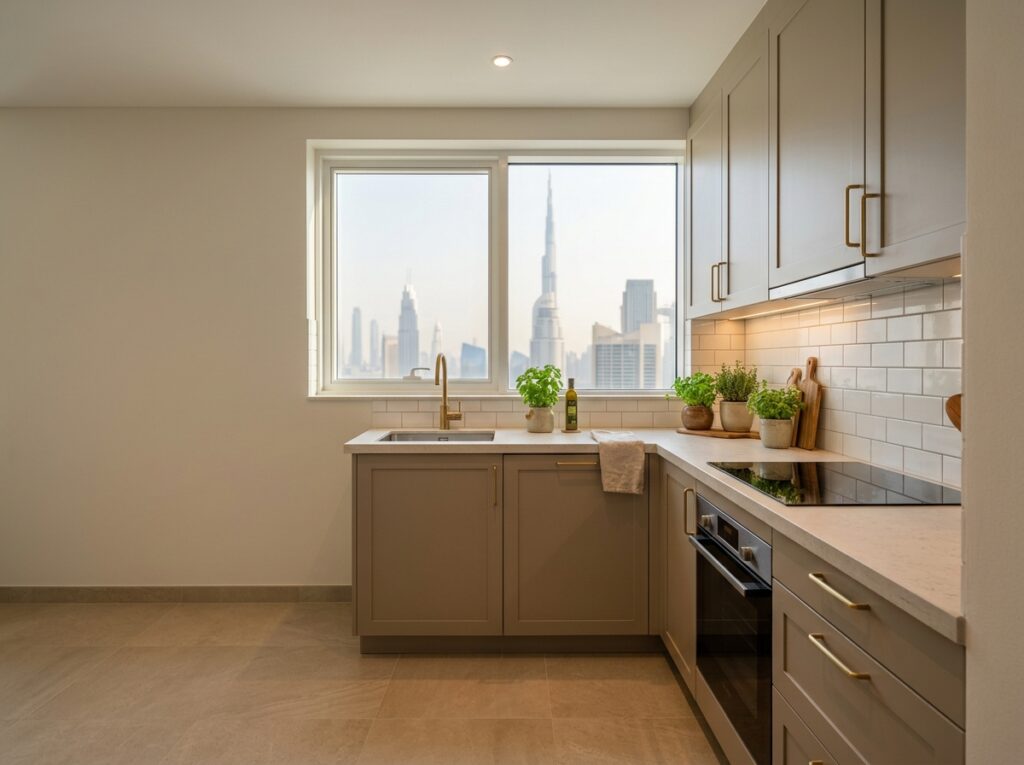
How to Make a Budget Kitchen Look More Expensive
The difference is rarely one premium item. It is consistency.
Keep cabinet reveals even. Align handles. Use one wall colour. Hide cords. Use full-height end panels where possible. Make the worktop edge simple and clean. Choose a sink that fits the cabinet correctly. Use warm lighting. Keep the counter uncluttered.
A small kitchen also benefits from visual calm. Avoid tiny, busy tiles plus strongly veined worktops plus patterned floors plus open shelving all in one space.
Pick a hero and let it breathe.
For a safe high-end formula, try this:
- Matte warm-white or greige cabinet fronts.
- A pale stone-look or warm concrete-look worktop.
- A simple ceramic backsplash in the same colour family.
- Matte black or brushed metal hardware.
- Warm-neutral under-cabinet lighting.
- One timber tray, a small herb pot, and nothing else competing for attention.
That combination photographs well, works in rentals, and does not scream “trend of the year.”
Final Thoughts: A Better Kitchen Does Not Require a Bigger Demolition
To remodel a kitchen on a budget, think like an investor, not a showroom shopper.
Keep the layout when it works. Spend on durable surfaces, reliable systems, storage, and lighting. Save on dramatic construction changes, unnecessary imports, and decorative extras that do not improve daily life.
Your smartest renovation is the one that feels intentional from every angle: functional enough for your routine, tough enough for local heat and cooking habits, and simple enough to finish without surprise bills.
Get your approvals early, compare detailed quotes, and keep a contingency reserve. Then use the rest of the budget where your hands and eyes land every day.
Next Read: Affordable Kitchen Renovations
Ready to stretch your money even further? Read our next article on affordable kitchen renovations for practical renovation packages, cost-cutting material ideas, and upgrade combinations that deliver a polished look without the premium price tag.