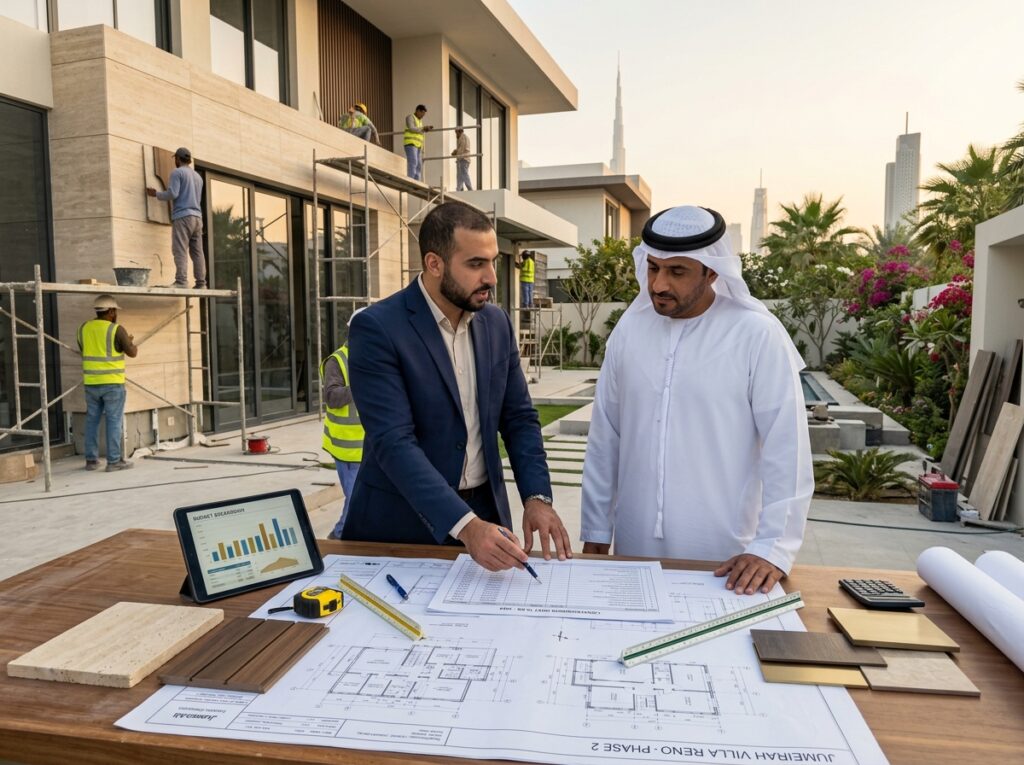
I remember sitting with a villa owner who had a clear number in mind for his renovation. He wanted a modern kitchen, upgraded bathrooms, a fresh façade, and a new outdoor majlis area. On paper, the plan sounded straightforward. Then the contractor opened a ceiling panel and found outdated wiring, undersized drainage, and a cooling system that could not support the new layout. His “comfortable” budget suddenly became a very uncomfortable conversation.
That is exactly why cost planning in construction matters. It gives you a disciplined way to decide what you can build, renovate, upgrade, or fit out before the project starts burning cash.
Whether you are improving a Dubai apartment, renovating a Muscat villa, building a family home in Oman, fitting out an office in Doha, or adding value to an investment property in Qatar, the principle stays the same: plan the money before you commit to the work.
A strong cost plan does not mean you will never face surprises. It means surprises do not destroy your project.
What Is Cost Planning in Construction?
Cost planning in construction is the process of mapping every expected project expense before the job begins, then tracking those costs as the design, procurement, and construction stages move forward.
It is bigger than asking three contractors for a rough quote.
A proper cost plan looks at the entire project picture:
- Design and consultant fees
- Authority approvals and permits
- Demolition and site preparation
- Structural works
- MEP work, including mechanical, electrical, and plumbing
- Materials, finishes, fixtures, appliances, and fittings
- Labour, logistics, site protection, and temporary works
- Contractor preliminaries and project management
- Contingency for hidden conditions or scope changes
- Escalation allowances for delayed procurement or market movement
- Testing, commissioning, handover, and defects liability costs
The goal is simple: match the scope you want with the money you actually have.
Without that match, the project turns into a guessing game. You begin with a luxury vision, receive a low quote, start the work, then discover that the quote excluded joinery, landscaping, lighting, authority fees, waterproofing repairs, or realistic lead times.
That is not a budget. That is a trap.
Why Cost Planning Matters More in UAE, Oman, and Qatar
The Gulf construction market moves fast. Labour availability, imported materials, premium finish expectations, cooling requirements, permits, building management rules, and seasonal site conditions can all influence the final figure.
In the UAE, for example, owners need to consider the difference between base build work and high-spec fit-out. Turner & Townsend’s 2025 benchmark placed Dubai’s average construction cost at about US$1,926 per square metre across several building categories, but that is a high-level market benchmark, not a guaranteed quote for a villa, apartment renovation, or retail unit. Specification, location, access, building type, and finish level can change the number dramatically. cial interiors, the gap becomes even wider. Turner & Townsend reported average premium office fit-out costs in Dubai and Abu Dhabi at roughly US$3,499 per square metre in its 2025 guide. That does not mean every office needs that budget, but it proves how quickly specification, technology, finishes, and contractor demand can raise the cost ceiling. ion may look modest until permits, plot conditions, access, utilities, and municipality requirements enter the conversation. Government services distinguish between major and minor building permits, and minor permits can apply to renovations, maintenance, temporary structures, and similar works. ors and consultants regularly work with the Qatar Construction Specifications and relevant authority requirements. That means a cost plan should never ignore technical compliance, inspections, fire-safety requirements, materials approval, or testing needs. cheap-looking number is not always a cheap project.
The Difference Between Cost Estimating and Cost Planning
People often treat these two terms as the same thing, but they solve different problems.
A cost estimate answers: “What might this work cost?”
A cost plan answers: “How should I allocate, control, phase, and protect the project budget from start to finish?”
An estimate might tell you that a kitchen renovation could cost AED 150,000. A cost plan breaks that figure down:
- How much goes to demolition?
- How much goes to cabinetry?
- Are appliances included?
- What is the allowance for stone countertops?
- Does the electrical work include new circuits?
- Are ceiling repairs included after ductwork changes?
- Is VAT included?
- What happens if the owner upgrades from standard lighting to decorative imported fixtures?
- Is there money reserved for defects found after demolition?
That is where the project becomes manageable.
A Simple Construction Cost Plan Structure
For a residential renovation or moderate commercial fit-out, a practical early-stage budget can use percentage-based allowances before detailed quotations arrive.
Here is a useful planning structure:
| Cost Category | Typical Planning Range | What It Covers |
|---|---|---|
| Direct construction work | 55%–70% | Labour, core materials, installation |
| MEP and technical upgrades | 10%–20% | Electrical, plumbing, HVAC, fire systems |
| Finishes and fixtures | 10%–25% | Tiles, paint, flooring, sanitaryware, lighting |
| Design and consultants | 5%–12% | Architect, interior designer, engineer, approvals |
| Contractor preliminaries | 5%–10% | Site setup, supervision, protection, logistics |
| Contingency | 5%–20% | Hidden defects, changes, site surprises |
| Escalation allowance | 2%–8% | Price movement, delays, imported items |
These are planning allowances, not fixed market prices. A simple repainting job will not need the same structure as a full villa extension or premium office fit-out.
For example, an older property may need a larger contingency because demolition can reveal issues nobody could see at the start. A new apartment handover may need less structural allowance but more focus on fit-out, joinery, smart-home systems, decorative lighting, appliances, and building management approvals.
7 Steps for Better Cost Planning in Construction
1. Lock the Scope Before You Chase Quotes
The first mistake most owners make is asking for prices before explaining exactly what they want.
“Renovate my villa” is not a scope.
A useful scope should explain:
- Rooms included and excluded
- Demolition requirements
- Layout changes
- Material grade and finish level
- MEP upgrades
- Appliances and equipment
- External works, landscaping, pergolas, pools, or majlis additions
- Furnishing requirements
- Authority and building-management responsibilities
- Target completion date
The clearer your scope, the easier it becomes to compare contractors properly.
When one contractor includes premium marble, custom joinery, and full MEP changes while another includes only basic tiles and repainting, you are not comparing prices. You are comparing two completely different projects.
2. Build a Budget Around Priorities, Not Dreams
Let’s be real: most owners have a “nice-to-have” list that quietly becomes a budget killer.
Split your project into three layers:
- Must-have work: safety, waterproofing, electrical upgrades, HVAC, plumbing, structural repairs, legal compliance.
- Value-adding work: kitchens, bathrooms, façade upgrades, flooring, lighting, storage, landscaping.
- Lifestyle upgrades: luxury stone, designer fittings, smart automation, decorative ceilings, imported furniture, high-end outdoor entertainment areas.
This approach protects you when numbers start climbing.
You can delay lifestyle upgrades. You should not delay waterproofing, electrical protection, drainage, or air-conditioning capacity.
A smart owner does not cut the hidden work to protect the visible finishes. That is how expensive problems return later.
3. Separate Base Cost From Optional Upgrades
Every quote should separate essential scope from upgrades.
For example, a bathroom renovation may include a base package covering demolition, waterproofing, tiling, plumbing modifications, vanity installation, standard sanitaryware, and painting.
Then you can list upgrades separately:
- Imported freestanding bathtub
- Premium brassware
- Large-format porcelain slabs
- Heated mirrors
- Smart toilet
- Custom glass partition
- Decorative wall cladding
- High-end lighting package
This protects your base budget while still giving you room to upgrade where it matters most.
It also prevents the contractor from treating every requested change as an emergency variation.
4. Add a Real Contingency, Not a Fake One
Contingency is not “extra money the contractor can spend.” It is a controlled reserve for risks you cannot fully see at the start.
For a straightforward fit-out in a newer unit, you may reserve around 5% to 10%.
For an older villa, major renovation, structural alteration, extension, or project involving demolition, a 10% to 20% contingency is often more realistic.
Use it only for things like:
- Corroded pipes behind walls
- Water damage under flooring
- Electrical upgrades required after inspection
- Hidden cracks or concrete repairs
- Unforeseen drainage issues
- Building-management changes
- Material substitutions caused by discontinued products
- Delay-related logistics or storage costs
Do not use contingency to pay for a last-minute luxury upgrade you simply decided to add.
That is a client variation, not a project risk.
5. Check Approvals Before Signing the Contract
This is especially important across UAE, Oman, and Qatar.
In Dubai, modifications and additions to buildings can require formal permits and processes through Dubai Municipality, while the Dubai Building Code sets minimum requirements for building design and construction. tegories and requirements can vary by municipality and project type. Some government services specifically cover construction permits, minor permits, completion certificates, and plan approvals. may need to account for municipal requirements, Civil Defence conditions, technical specifications, approvals, inspections, and contractor qualifications depending on the scope. a contractor, ask these questions:
- Who will obtain the permit?
- Are permit fees included?
- Are drawings and engineering submissions included?
- Who pays for authority inspections?
- Who handles building management NOCs?
- Are civil defence requirements included where relevant?
- Is waste removal included?
- Does the contractor carry the required insurance?
- Is the contractor approved for the building or community?
A contractor who says, “We will sort it out later,” is usually inviting cost trouble.
6. Compare Quotes Line by Line
Do not choose the cheapest lump-sum number without reading the exclusions.
Ask each contractor to provide:
- A detailed bill of quantities or scope breakdown
- Material brand and model details
- Labour and installation allowances
- MEP scope
- Demolition and disposal costs
- Site protection and cleaning
- Project duration
- Payment schedule
- Warranty and defects liability period
- Exclusions and provisional sums
- Variation procedure
- Delay responsibilities
The goal is not to find the contractor with the lowest number.
The goal is to find the contractor whose number is clear, complete, and commercially realistic.
A low quote can become the highest final cost once variations start landing on your desk.
7. Track the Budget Weekly Once Work Starts
Cost planning in construction does not stop after signing the contract.
Once the project begins, track three numbers every week:
- Original approved budget
- Approved variations
- Forecast final cost
This is your financial dashboard.
For example:
| Budget Item | Original Allowance | Approved Changes | Forecast Final Cost |
|---|---|---|---|
| Kitchen cabinetry | AED 90,000 | AED 15,000 | AED 105,000 |
| Electrical upgrades | AED 40,000 | AED 8,000 | AED 48,000 |
| Bathroom finishes | AED 65,000 | AED 10,000 | AED 75,000 |
| Contingency reserve | AED 50,000 | AED 20,000 used | AED 30,000 remaining |
This simple habit stops the classic owner problem: discovering the budget is gone when the project is already 80% complete.
Common Cost Planning Mistakes That Blow Up Construction Budgets
Underestimating MEP Work
Electrical, plumbing, HVAC, drainage, internet, smart-home systems, and fire-safety work often sit behind walls and ceilings. Owners do not always see them, so they underestimate them.
But in hot Gulf climates, HVAC capacity and airflow are not optional details. Poor cooling design can ruin a beautiful renovation.
Do not spend heavily on marble and chandeliers while ignoring electrical load, ducting routes, insulation, drainage falls, or ventilation requirements.
Choosing Materials Before Checking Lead Times
A tile may look perfect in a showroom, but it may be out of stock, require international shipping, or arrive with a long lead time.
This creates two risks:
- You delay the project.
- You pay more for substitute materials or urgent freight.
A good cost plan includes a procurement schedule. High-value or imported items should be selected early, especially joinery hardware, sanitaryware, stone, decorative lighting, doors, kitchen appliances, and custom furniture.
Ignoring Building Access and Logistics
A tower renovation in Dubai or Doha can cost more than the same renovation in a villa because of lift bookings, loading windows, waste movement, working-hour restrictions, parking, protection requirements, and building-management approvals.
Site access changes labour productivity. Labour productivity changes cost.
This is why contractors should inspect the site before issuing a final quote.
Paying Too Much Upfront
Avoid payment schedules that heavily favour the contractor before measurable work is complete.
A healthier schedule is linked to milestones:
- Mobilisation after contract signing
- Demolition completion
- First-fix MEP completion
- Waterproofing and testing
- Tiling and joinery installation
- Second-fix completion
- Snagging and handover
- Retention release after defect period
Always connect payments to visible progress, not vague promises.
How Cost Planning Helps You Hire Better Contractors
A good contractor cannot price a blurry project accurately.
When you provide a clean scope, drawings, finish schedule, and budget framework, serious contractors can respond professionally. You also make it harder for weak contractors to hide exclusions.
The best renovation contractors do not just tell you what they can build. They tell you what can go wrong, what needs approval, what material choices affect timing, and where your budget may need protection.
Watch for these green flags:
- They ask detailed technical questions.
- They inspect the site before final pricing.
- They explain exclusions clearly.
- They provide material alternatives at different price levels.
- They identify long-lead items early.
- They use a written variation process.
- They give realistic timelines instead of impossible promises.
- They can explain their quality-control and handover process.
A contractor who pushes you to sign quickly without clarifying scope is not helping you save money. He is protecting his own flexibility.
Cost Planning for Renovations vs New Construction
New construction gives you more control over the sequence, but renovations come with more hidden risk.
With a new build, you can plan foundations, structure, MEP, façade, finishes, and external works in a more predictable order.
With renovations, you are working around an existing building. You may discover:
- Old pipework
- Unrecorded wiring
- Poor previous workmanship
- Water damage
- Structural modifications made by earlier owners
- Inadequate insulation
- Mismatched floor levels
- Existing equipment that does not suit the new design
That is why a renovation cost plan needs stronger investigation at the start.
Before finalising your budget, consider surveys for MEP condition, structural changes, moisture, roof waterproofing, drainage, and HVAC capacity. Spending money on early investigation can save a much bigger amount after demolition begins.
Final Thoughts: Build the Budget Before You Build the Project
The biggest advantage of cost planning in construction is not that it makes a project cheap.
It makes the project controllable.
You know what you are paying for. You know where the risks sit. You know which upgrades are worth it. You know what must be approved. And you can make decisions before construction pressure forces your hand.
For property owners in the UAE, Oman, and Qatar, that control matters. The market offers incredible materials, ambitious design options, skilled contractors, and high-end finishes. But none of that helps when the budget is unclear.
Start with the scope. Break down the cost. Add contingency. Check permits. Compare contractors properly. Track variations weekly.
That is how smart owners protect their money without sacrificing the result.
Ready for the next step? Read our next article on renovation contractors to learn how to compare bids, verify credentials, avoid weak contracts, and hire a team that can deliver your project properly.